
A few days before Christmas, the shelves with homemade cookies start to look empty. The good ones are gone first — the fresh, buttery Christmas biscuits you were planning to pick up later. If you didn’t get the chance this year, there’s still a simple solution: make them yourself. Take inspiration from Austria, where Linzer cookies appear on tables every Christmas without fail. They look elegant, taste festive, and — despite their refined appearance — are surprisingly easy to make.
A Cookie with a 400-Year-Old Story
The first written mention of what we now call Linzer cookies dates back to 1653. At that time, they weren’t cookies at all. They appeared in a cookbook by the Austrian countess Anna Margareta Sagramosa, and they were described as a cake — the famous Linzer Torte.
This original dessert had a rich, buttery crust made with almonds, filled with blackcurrant preserve, and topped with a decorative lattice. It was luxurious, festive, and meant to be shared.
Interestingly, wheat flour was not always easy to obtain. Bakers sometimes used ground nut shells to create a crisp base — a reminder that baking has always been shaped by practicality as much as creativity.
So how did a grand cake turn into a small Christmas cookie?
The transformation happened in Linz, Austria, where bakers wanted something that could be stored longer, transported easily, and enjoyed throughout the festive season. One baker in particular, Johann Konrad Vogel, is credited with popularising the cookie version. Dough from the Linzer cake was rolled out, cut into shapes — stars, hearts, circles — and paired together with jam.
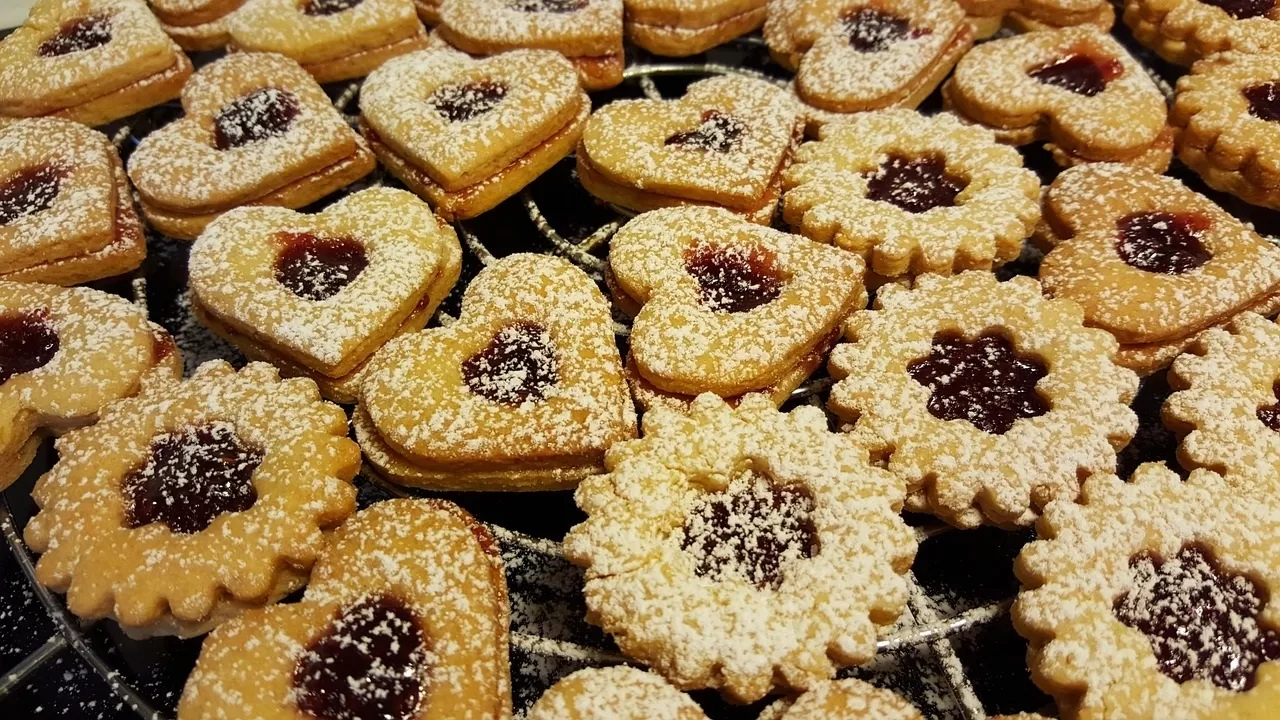
The top cookie had a cut-out centre, known as the Linzer eye, allowing the jewel-like jam to shine through. Over time, these cookies became a Christmas tradition, often displayed on windowsills, dusted with icing sugar like frost.
Today, Linzer cookies are baked all over the world. In Austria, black or red currant jam remains classic. In America, anything sweet goes — including chocolate spreads. And now, South Africans are discovering just how perfectly these cookies fit into our festive tables.
Butter Matters
Linzer cookies are simple, which means every ingredient matters — especially the fat.
Traditionally, the best choice is unsalted farm-style butter. It gives the dough a clean, rich flavour and that melt-in-the-mouth texture Linzer cookies are famous for. If budget allows, this is always the gold standard.
That said, good butter can be expensive, and baking should stay joyful, not stressful. A high-fat baking margarine is a perfectly acceptable alternative if chosen carefully.
Look for:
- block, not a tub
- Higher fat content (around 70% or more)
- A neutral flavour
One option that works very well is Marvello. With 70% fat and a mild taste, it performs reliably in baking. A 500 g block costs around R30, and even less when on special. Be cautious with cheaper margarines — some have a noticeable chemical aftertaste that can spoil the cookies.
Choosing the Right Jam
The jam is not just filling — it’s the heart of the cookie.
The best jams for Linzer cookies have:
- A smooth texture
- Balanced sweetness and acidity
- No large fruit pieces or seeds
Best options:
- Red or black currant jam – the most traditional choice, beautifully tangy and very Austrian
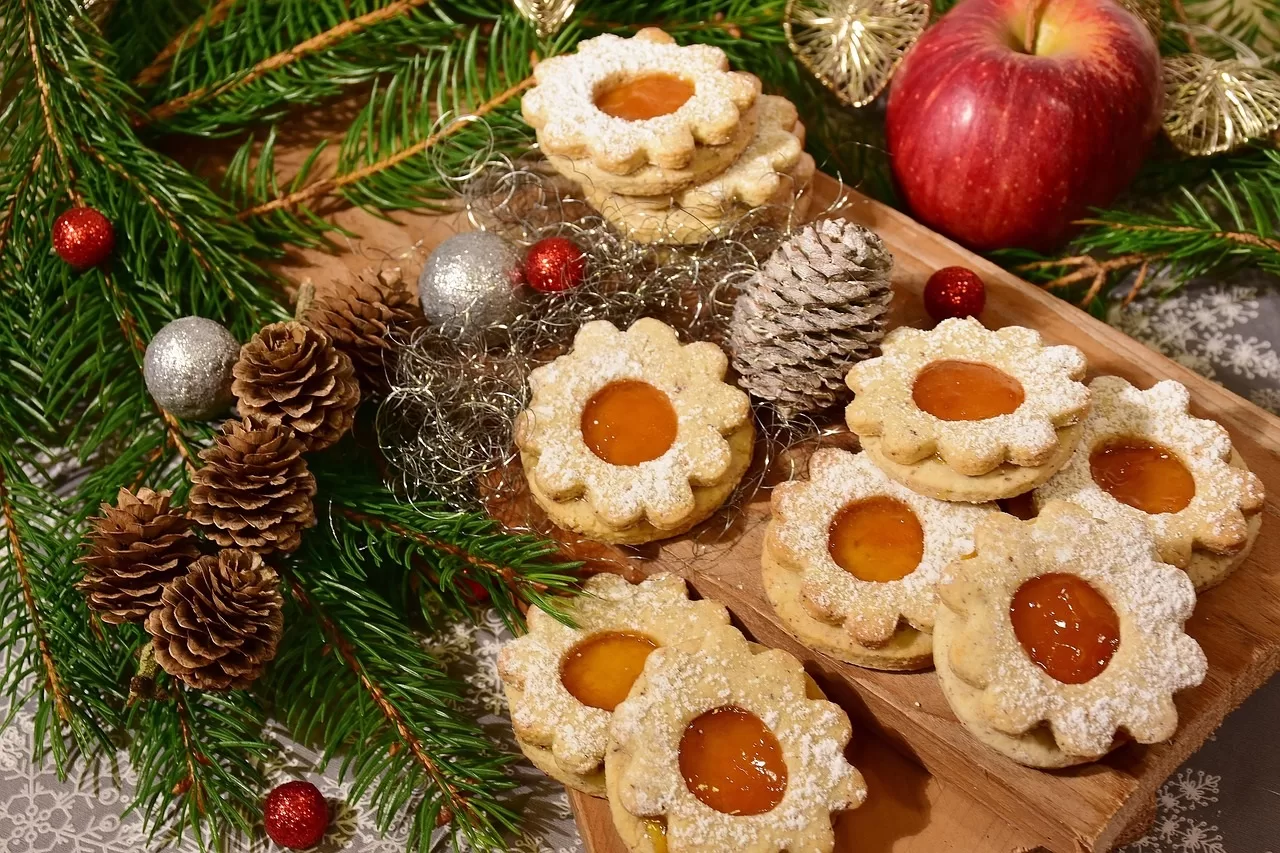
- Apricot jam – a classic second favourite, fragrant and gently sharp
- Raspberry, blackberry or cherry jam – sweeter, fruitier, and especially popular with children
Jam should be spreadable, but not runny. For neat assembly, spoon the jam into a piping bag and apply it like a cream. A thin, even layer is all you need.
Once filled, Linzer cookies should rest for 2–3 days. During this time, the jam softens the cookie and the flavours come together beautifully. Make them too far ahead, however, and the jam may dry out.
Do You Need Special Cookie Cutters?
Not at all. You can use:
- A large round cutter (about 5 cm)
- A small round cutter (about 2.5 cm)
Fluted edges look lovely, but smooth ones work just as well.
No cutters? No problem.
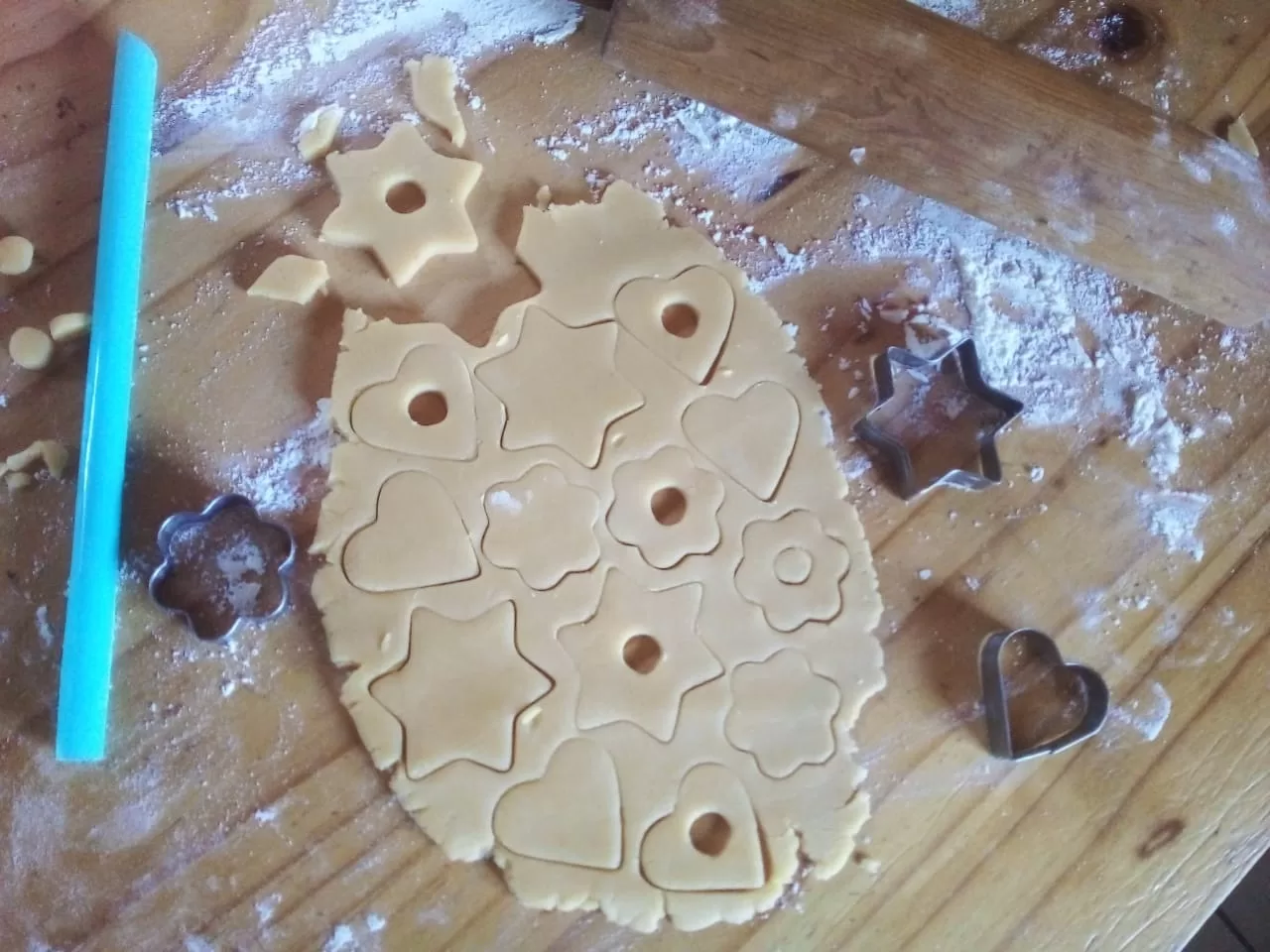
- Use an upturned glass for the outer shape
- Cut the centre with a thick straw, bottle opening, or round piping tip
Mixing different jam flavours in one batch makes the cookies visually stunning — a tray full of red, orange, and deep purple eyes looks absolutely festive.
Easy Linzer Cookies Recipe
Ingredients
- 210 g plain flour (not self-raising)
- 140 g butter or high-fat baking margarine
- 70 g icing sugar
- 1 egg yolk
Method
Prepare the dough
Combine flour and icing sugar in a bowl. Add cold butter cut into small cubes and rub it in until the mixture resembles fine breadcrumbs. Add the egg yolk and bring everything together into a soft dough.
Rest overnight
Shape the dough into a flat disc, wrap it tightly in foil, and refrigerate overnight. This step is essential — it improves flavour and makes rolling easier.
Roll and cut
Roll the chilled dough out on a lightly floured surface to about 3–4 mm thickness. Cut out shapes in pairs. In half of them, cut a small hole in the centre to create the “eye”.
Bake
Place cookies on a lined baking tray and bake at 170 °C for about 8–10 minutes, until pale golden. They should not brown. Cool completely.
Fill and assemble
Dust the cookies with holes lightly with icing sugar. Spread or pipe jam onto the solid bases, then gently sandwich them together.
Rest before serving
Store in an airtight container for 2–3 days before serving for the best texture and flavour.
Delicate, buttery, and quietly sophisticated, Linzer cookies are more than just a Christmas treat. They are a reminder that good things don’t need to be complicated — just well made, patiently rested, and shared with people you love.
Sources: lifee.cz, toprecepty.cz, kingarthurbaking.com